
Which Lomita Public Records Are Open
Lomita public records do not sit in one database. The City Clerk holds city-created files, while Los Angeles County keeps the main property, court, vital, voter, and jail systems. State agencies add licenses, prison custody, business entities, and selected vital copies. First identify the custodian, meaning the office responsible for maintaining the file. The table also separates a searchable index from the document itself. An index points to a file but may not display its image or supply a certified copy.
| Lomita record group | Responsible custodian | Web access | How access works |
|---|---|---|---|
| City agendas, permits, contracts, licenses | Lomita City Clerk and city departments | Request page; permit modules | Online workflow or California Public Records Act request |
| Deeds, liens, mortgages | LA County RR/CC Recorder | No internet index | Norwalk appointment; copy request when document details are known |
| Property assessment and maps | LA County Assessor | AIN, address, and map portal | Free portal; office or records request fallback |
| Civil, criminal, probate, family cases | Los Angeles Superior Court | Online services vary by case type | Web search, courthouse terminal, clerk, or archives |
| Birth, death, marriage | LA County RR/CC and CDPH | Historical indexes are separate | Authorized or informational copy rules apply |
| Jail, prison, offender registry | LASD, CDCR, California DOJ | Separate official lookups | Current custody or registry data; legal limits apply |
Open access does not erase confidentiality. Juvenile and sealed court files, adoption records, protected voter data, confidential marriages, and Safe at Home addresses are not ordinary open records. DMV information is also restricted. For a city permit or council file, the City Clerk is the right door. A deed request belongs with the recorder, and a court file belongs with the court. Sending one broad request to the wrong body only adds delay.
How Lomita Records Requests Work
The California Public Records Act, Government Code division 10, sections 7920.000 through 7931.000, governs local agency requests. Any person may seek nonexempt records. The agency generally has 10 days to determine whether it holds disclosable material. Unusual circumstances can support a 14-day extension. That determination is not always the day copies arrive. Nonexempt files must then be made promptly available, subject to direct duplication or other lawful costs.
Specific wording helps. Ask for a known record type, department, address, date range, permit number, agenda item, or document number. The Lomita City Clerk request channel covers records made by the city. It does not replace the recorder's deed process, court access rules, or vital certificate forms. If part of a file is exempt, ask the agency to release the reasonably separable remainder with protected details redacted.
Where Lomita Records Custodians Work
City Hall is the local counter for municipal records, but major county systems sit elsewhere. The Los Angeles County Registrar-Recorder/County Clerk combines recorder, clerk, and election duties in Norwalk. Superior Court controls case records. The Assessor maintains parcel and assessment data.
Lomita City Clerk
24300 Narbonne Ave.
Lomita, CA 90717
(310) 325-7110
City requests, council files, permits, and local administrative records
Los Angeles Superior Court
Countywide courthouses and Archives and Records Center
(213) 830-0803
LA County Assessor
County parcel, map, value, and assessment records
Use AIN or street address
RR/CC phone routing uses option 1 for birth, death, and marriage records; option 2 for recording; option 3 for real estate records after recording; and option 4 for business filings. A case portal result may point to a courthouse or archive rather than provide the full file online.
Note: Lomita City Hall cannot supply deeds or superior court files because those records belong to separate county custodians.
Why Lomita Deed Records Stay Offline
Los Angeles County does not publish its real estate index or document images on the internet. The recorder ties that policy to former Government Code section 6254.21 and the risk that recorded documents may expose protected officials' home addresses. Telephone index searches are not offered either. Access begins with an appointment at Norwalk. The alphabetical name index and recording year identify a deed, lien, mortgage, or other instrument, while a known document number supports a later copy order.
The physical split is easy to miss. Records from 1851 through 1957 are reviewed on the lower level. Records from 1958 forward are on the second floor. Appointments may be scheduled up to two weeks ahead.
| Recorder search field | Form | Needed? | Practical note |
|---|---|---|---|
| Party name | Physical alphabetical index | Yes | Use grantor and grantee names when known |
| Recording year | Year component | Yes | Determines the floor and narrows the name index |
| Document number or book/page | Copy identifier | For a specific copy | Best detail for in-person, online, or mail ordering |
| Appointment | Scheduling link | For review | No internet or telephone index search |
Grantor means the party transferring an interest. Grantee means the party receiving it. The county's offline policy is not proof that a deed is closed. It changes the access channel. Known document copies may still be purchased in person, online, or by mail after the index work identifies the filing.
Note: The year split at Norwalk saves time when a Lomita property has a long ownership history.
Lomita Property Records and Alerts
The Assessor Portal searches current parcel and map data by Assessor Identification Number, often shortened to AIN, or by address. An AIN identifies the parcel even when street spelling varies. The situs address is the physical property location. A mailing address is where tax or owner mail goes, and it may differ. Owner-name search was not confirmed in the official static source, so avoid assuming that field exists. Use the address or AIN controls the county documents.
Property monitoring also creates a useful safety layer. The LA County Assessor Homeowner Alert page shows the official registration point for notices tied to foreclosure, title-transfer, or mortgage activity.
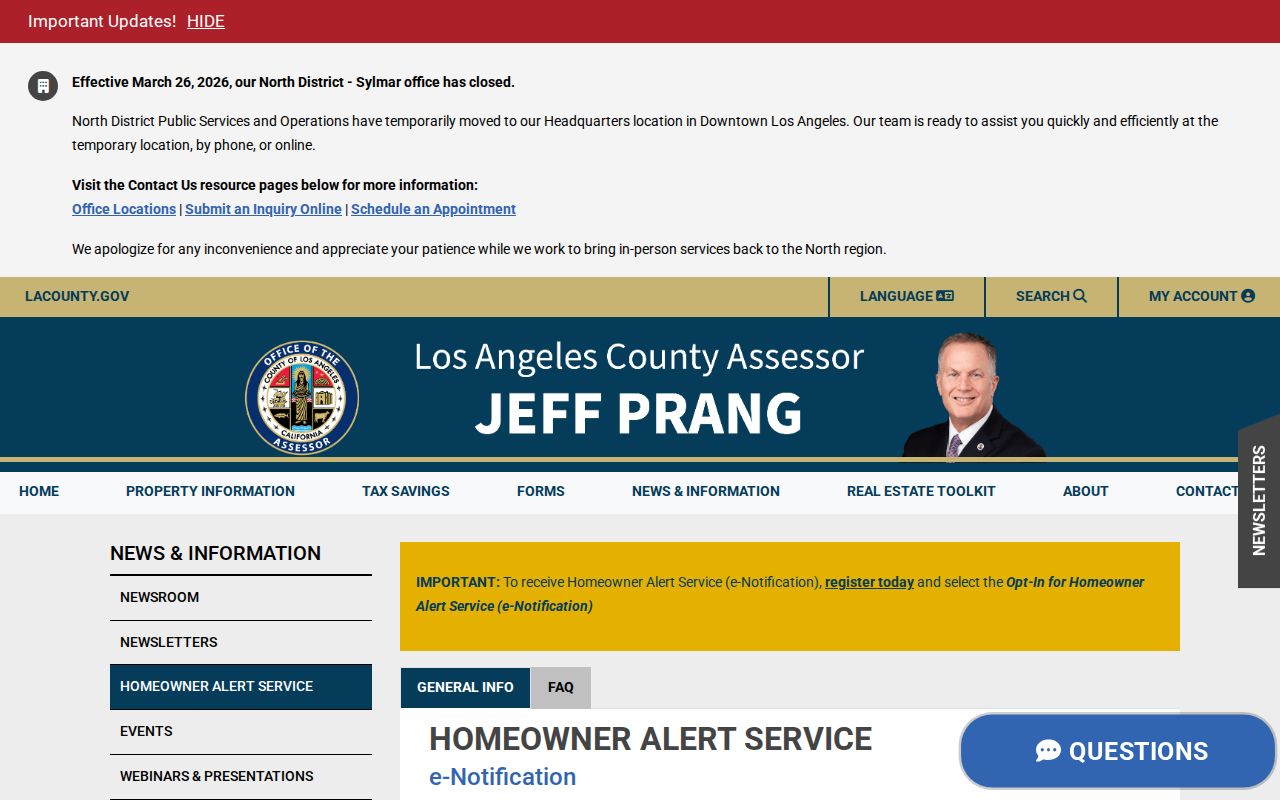
The alert does not replace the recorder's title records. It helps an owner spot new activity and then verify the underlying document through official county channels. RR/CC mailed notifications and county consumer-protection help add separate layers when a recorded document affects a home.
Lomita Court Records Access
Lomita has no municipal court file system. Los Angeles Superior Court provides separate online tools for civil, criminal, family, probate, small claims, and traffic matters. Name tools may locate a case number, while calendars, summaries, registers of actions, and document images vary by case type. A docket is the chronological list of filings and events in a case. A disposition is the result or status, when the system displays one. Neither term means every underlying document is open online.
California Rules of Court 2.503 and 2.507 limit remote electronic access. Courthouse terminals and clerks remain important, especially for sensitive or older files. The LASC Archives and Records Center holds the majority of listed case types filed from 1911 through 2004. Los Angeles-area court material from 1850 through 1911 has a separate historical path through the Huntington Library finding aid.
Federal cases use PACER and Central District clerk or archive channels. PACER charged $0.10 per page in the inspected source, with a $3 document cap in many cases. An announced temporary rate of $0.12 per page takes effect January 1, 2027, with the quarterly automatic exemption rising to $40.
Note: A name result identifies a case trail, but the courthouse or archive may still hold the only available file copy.
Lomita Vital Records Copies
Los Angeles County RR/CC is the practical source for county events. County births date from 1866, deaths from 1877, and marriages from 1852 in the research inventory. CDPH handles statewide requests, but its coverage differs. It provides public marriage copies for 1905 through 1999, not 2000 through 2007. The county that issued the license handles the gap.
California distinguishes an authorized certified copy from an informational one. An authorized mail request can require a notarized sworn statement. An informational copy is marked as not valid to establish identity. Confidential marriage records are not in ordinary marriage indexes and may be obtained only by the spouses or with a court order. A certified copy is an official copy bearing the custodian's certification, not merely a screen print or index entry.
The CDPH birth-record instructions show the VS 111 form, sworn-statement requirement, and mail procedure.
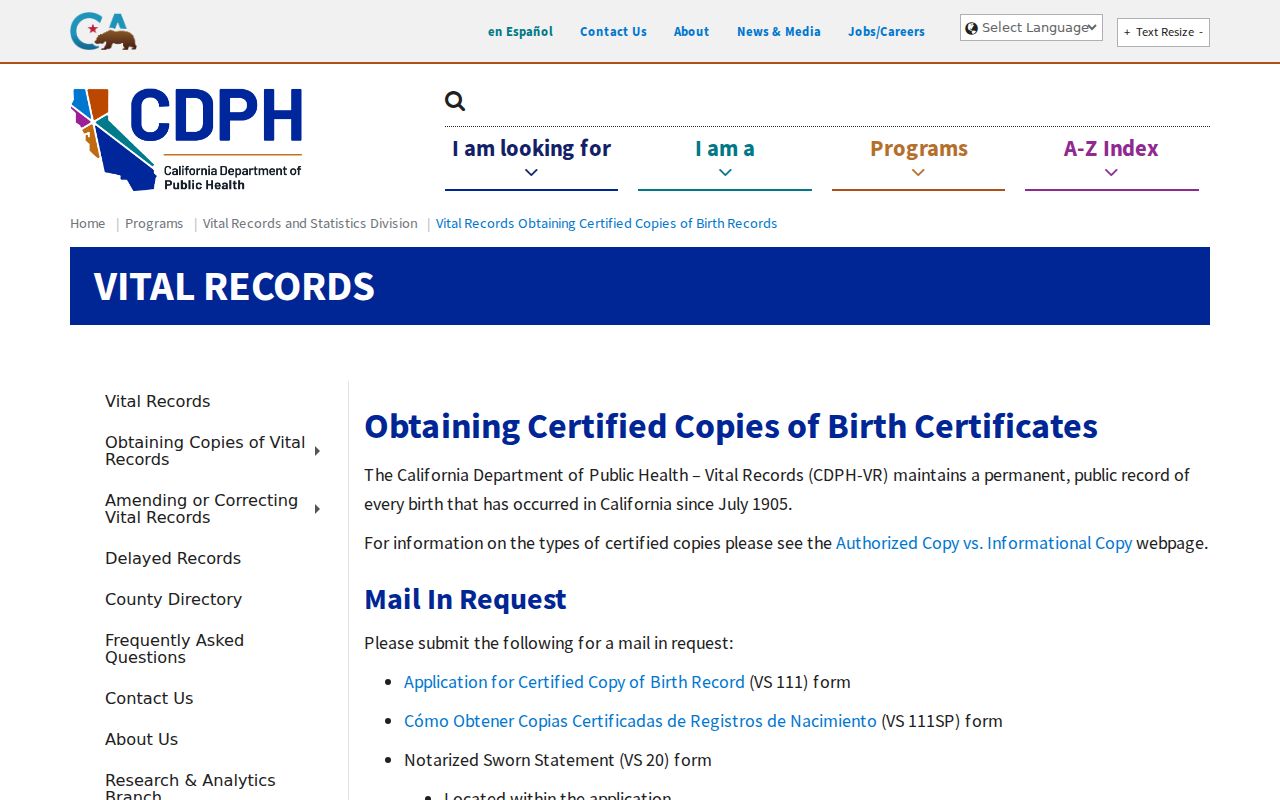
The form shown here illustrates why an index match and legal access to a certificate are separate steps. The inspected CDPH fee was $29 for a birth copy and $17 for a marriage copy.
Lomita Custody and Registry Records
County jail, state prison, and registry systems answer different questions. The LASD Inmate Locator searches current county custody by name and date of birth. A 24-hour phone route exists at (213) 473-6100 or (213) 473-6080. CDCR's CIRIS covers state custody, not county bookings. Federal custody belongs in the federal Bureau of Prisons lookup.
California's public offender registry is a public-safety resource, not a complete criminal history. The California Megan's Law search page is the official registry entry point.
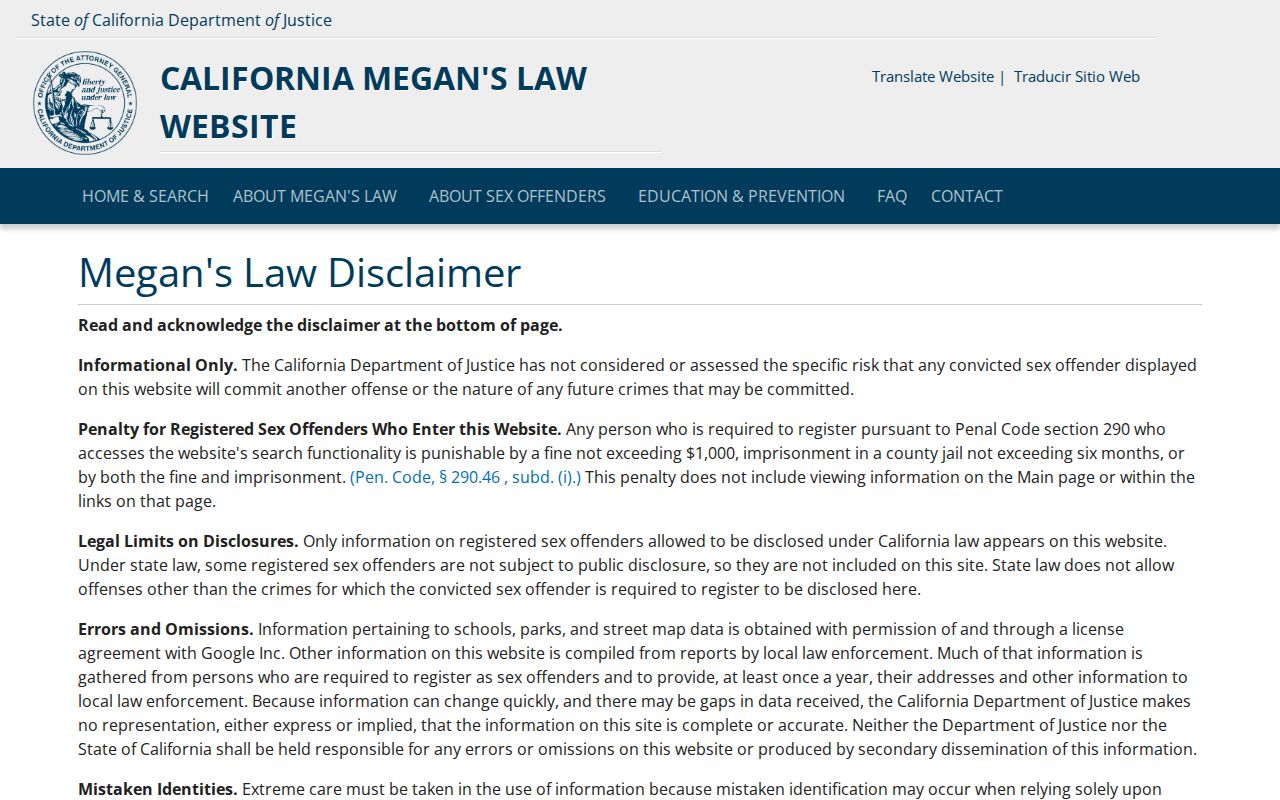
The registry image confirms the correct state source. Use it within the posted legal limits. Lomita police reports belong to the LASD Lomita Station, not City Hall, and active investigations, victim details, juvenile files, and protected reports may be withheld or redacted.
Fees Across Lomita Record Systems
Fees depend on the product, not merely the office. Inspection can be free even when certification or document images cost money. The RR/CC mail-solicitation alert states an official certified deed copy costs $6 for the first page and $3 for each added page per document. That published amount is a strong check against letters that offer costly deed copies. Vital, voter, court, and federal systems use their own schedules.
| Record product | Researched fee | Access note |
|---|---|---|
| Certified deed copy | $6 first page; $3 each added page | Per RR/CC solicitation alert |
| CDPH birth copy | $29 | VS 111 mail process inspected |
| CDPH public marriage copy | $17 | Coverage limits apply |
| LA County voter history | $6.75 per name | Election law controls access |
| PACER | $0.10 per page; $0.12 from Jan. 1, 2027 | Search-result pages can also incur fees |
Ask for an estimate when a request may be large. Inspection, an uncertified copy, a certified copy, and custom data extraction are not the same product. Never infer a fee where the custodian has not published one.
Note: Compare any deed-copy offer with the recorder's official price before sending money or personal information.
Closed and Redacted Lomita Records
An exemption is a law that permits or requires an office to withhold all or part of a record. Common limits in Lomita records include juvenile files, sealed cases, adoption material, confidential marriages, protected voter data, medical details, active law-enforcement investigations, and protected addresses. Court files can also be open at a courthouse while unavailable through remote electronic access. Redaction removes protected details while leaving the rest of a record readable.
- Index
- A list that identifies a record and helps retrieve it; it is not the document image.
- Certified copy
- An official copy authenticated by the custodian for formal use.
- Custodian
- The agency or office that maintains and controls access to the file.
- Exemption
- A legal basis for withholding a record or specific information within it.
Lawful personal use. Open access does not permit stalking, threats, or harassment. California Penal Code sections 646.9 and 653.2 can apply to harmful pursuit or electronic distribution of identifying information.
Official Records Survive Broker Deletion
Deleting a commercial data-broker listing does not erase the official source. A deed remains with the recorder. A court index remains with the court. Parcel data remains with the Assessor, and restricted voter data stays with election officials under its own rules. California's privacy tools control broker-held copies and uses, but they do not rewrite government archives.
A wrong broker profile should be challenged through the broker or California privacy process. An error in an official filing must be addressed with the custodian's correction method. Safe at Home can shield an eligible participant's real address through a substitute mailing address, but it is not a broad deletion order for public files.
Requesting Lomita Public Records
A well-routed request names one custodian and one record set. Use the city's process for municipal material, the recorder's index and copy channels for real estate, LASC for cases, and the prescribed forms for certificates. The RR/CC NextRequest center lets a requester search prior agency requests or open a new one for RR/CC material that lacks a more specific order path.
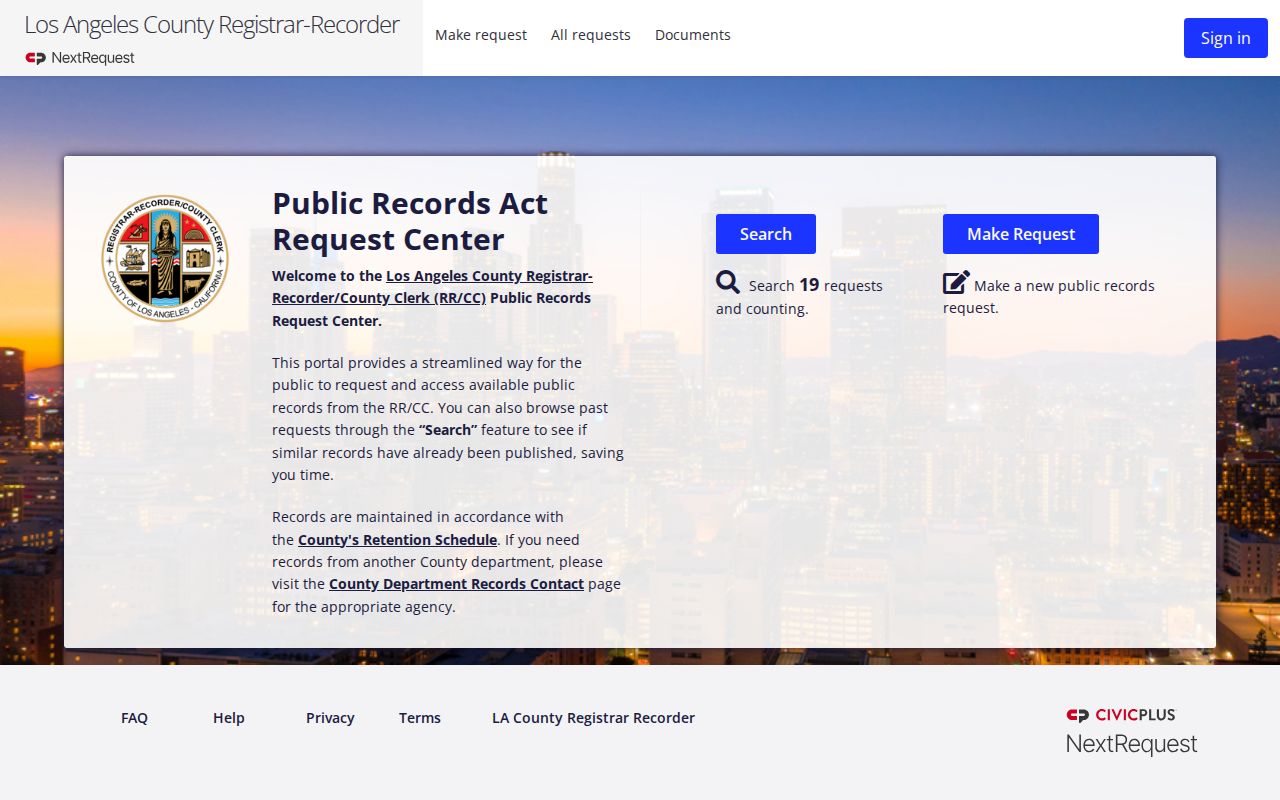
The request center does not replace a deed appointment, vital-record order, or restricted election procedure. Follow the record-specific channel when one exists.
- Name the custodian. Identify the agency that created or maintains the record.
- Use the set process. Check the official portal, appointment system, form, counter, or mail path first.
- Describe the file. Supply names, dates, address, department, case or permit number, and a narrow date range when known.
- Choose the product. State whether inspection, an electronic copy, a paper copy, or certification is needed, then review any cost estimate.
- Address a denial. Ask for the cited exemption, seek the nonexempt portion, narrow an overbroad request, or pursue court enforcement under CPRA when warranted.
Keep channels distinct. A CPRA request cannot bypass election-law limits, court access rules, confidential marriage restrictions, or the recorder's no-internet-index policy.